
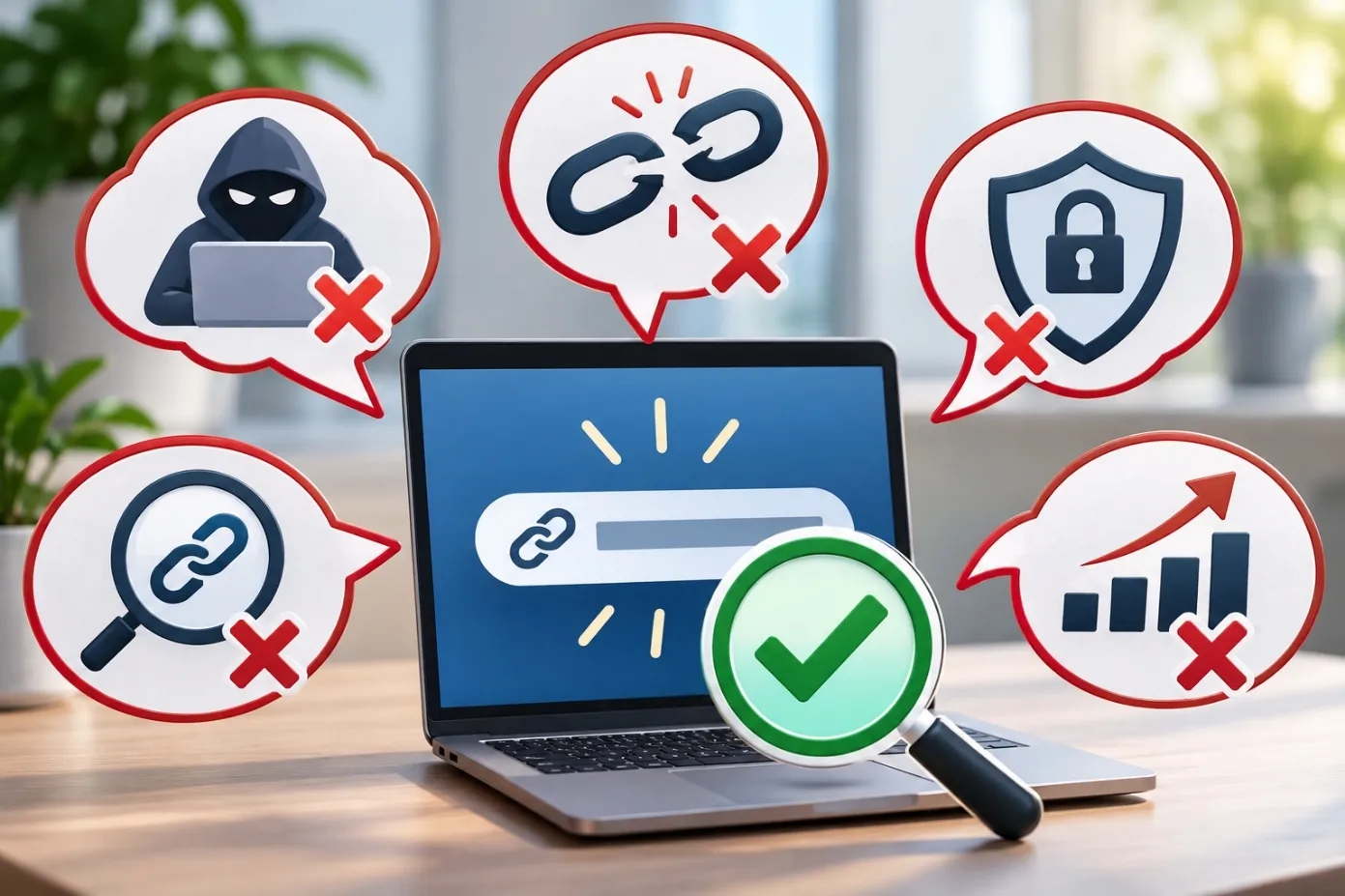
Few online tools attract as many misconceptions as the humble link shortener. Some people believe it is only for social media, while others assume it is unsafe or complicated. Let us separate fact from fiction, so you can decide whether short links deserve a place in your daily workflow and in your wider marketing plans.
Myth One: They Are Only for Social Media
Social platforms made short links popular, but their usefulness goes much further. Printed brochures, product packaging, presentation slides, and business cards all benefit from addresses that are easy to read, easy to type, and easy to remember after a single glance, even when the reader is standing in a busy street. A poster may also need a link that stays legible when printed in small type, while a slide should use an address that an audience can copy without pausing the presentation.
Even internal documents gain from them, which surprises many first-time users. Sharing a lengthy file path in a team chat is clumsy, whereas a short, clear link is quick to read and simple to remember. Teams that adopt the habit often find that fewer people ask where a particular document lives or which version is the latest.
Myth Two: They Compress or Change Your Page
Some people mistakenly believe that a custom URL shortener compresses or changes the original destination page. In reality, a short link changes only the address being shared. The original page, including its images, buttons and text, remains intact and operates as designed.
When someone opens a shortened address, a redirect takes them to the original page. The destination page’s content and design remain unchanged, although the redirect may add a small amount of processing time. A compact address can still be more convenient to share and remember.
Myth Three: Short Links Are Always Suspicious
Bad actors do misuse links, but the format itself is not the problem. Short links are not inherently unsafe, but users should consider the source before clicking. Destination previews, branded links and security checks can help improve transparency and trust. A familiar sender or descriptive ending alone cannot guarantee that a destination is safe.
Some URL-shortening platforms offer additional controls, including link expiration dates and password protection, depending on their features and subscription plans. These settings can help people manage access when appropriate, but users should still check unfamiliar destinations before opening them.
Myth Four: You Cannot Learn Anything From Them
Many assume a short link is a one-way street, but the opposite can be true. Depending on the platform and its analytics capabilities, click tracking may provide insights into approximate visitor locations, devices and referral sources. Reviewing available reports across campaigns can help businesses understand engagement patterns; features and costs vary between services.
That feedback is hard to obtain from a long, untracked address. With short links, you can test two headlines, compare two channels, and keep the version that earns more attention. Over time, small experiments like these steadily improve results without large budgets, specialist software, or a dedicated analytics team.
Myth Five: Setting Them Up Is Complicated
Creating a short link takes moments. You paste the destination, choose an ending if you like, and the address is ready to share. No coding, hosting, or technical knowledge is needed for everyday use, so even a first-time user can finish in a minute or two without reading a manual. Before sharing it widely, open the finished link in a private browsing window and confirm that it reaches the intended page. It is worth checking this again whenever a landing page moves or a campaign changes.
For businesses managing multiple campaigns, bulk URL shortening makes it easier to generate and organise many links at once. Combined with custom URLs and appropriate link tracking, these tools can help teams manage campaigns efficiently and compare engagement across channels. Learning these features takes a little effort but may save repetitive work later.
How to Know Whether Short Links Suit You
Ask yourself how often you share addresses. If you regularly paste links into messages, print them, or read them aloud, short links will save you time almost immediately.
Then consider measurement. If you wonder which post, poster or message attracted interest, separately tracked links can help you compare click activity. The usefulness of those comparisons depends on the reporting features available and how the links are configured.
The Bottom Line
Most objections to short links dissolve under close inspection. They are flexible, transparent when used honestly, and surprisingly informative. To experience the difference yourself, visit insprl.com and try creating your first link.