
Secure Lifecycles for Robust Federal Application Design
Key Takeaways
-
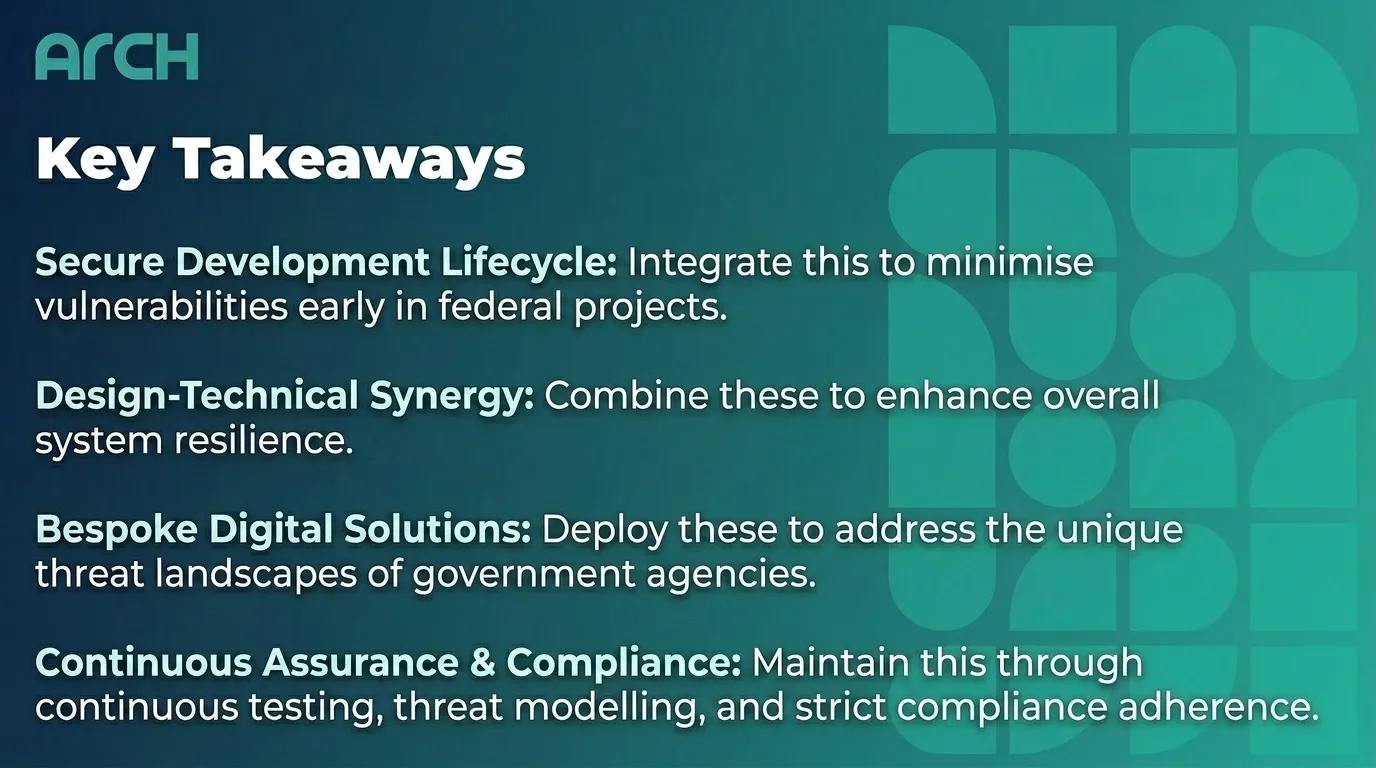
Integrating a secure development lifecycle minimises vulnerabilities early in federal projects.
-
Synergy between creative design and technical precision enhances overall system resilience.
-
Bespoke digital solutions are paramount for addressing the unique threat landscapes of government agencies.
-
Delivering excellence in federal IT requires continuous testing, threat modelling, and strict adherence to compliance mandates.
Navigating Federal Cybersecurity Imperatives
In an era where digital threats continually evolve, United States federal agencies face unprecedented challenges in safeguarding mission-critical infrastructure. The public sector operates under intense scrutiny, requiring systems that can withstand sophisticated and relentless cyber adversaries. Securing these environments is no longer an afterthought, but a foundational necessity embedded deeply within the architecture of any digital initiative.
Addressing these vulnerabilities requires prioritising secure development lifecycles within all federal application projects. By integrating stringent security protocols from the initial ideation phase through to deployment, agencies can proactively mitigate systemic risks. This strategic methodology ensures robust protection against emerging cyber threats within complex public sector frameworks.
Delivering Excellence Through Bespoke Digital Solutions
Federal applications demand a sophisticated approach that marries intuitive user experiences with uncompromising backend security. It is vital to achieve a synergy between creative design and technical precision, ensuring that applications are both accessible to the public and fortified against intrusions. Delivering excellence in this arena means crafting environments where security inherently supports, rather than hinders, operational efficiency.
Achieving this high standard often requires partnering with experts who understand the nuances of high-stakes software engineering. For agencies seeking to modernise their infrastructure, procuring top-tier web and app development services ensures access to bespoke digital solutions tailored to stringent government compliance. These specialised services embed security controls seamlessly into the very fabric of the software architecture.
By leveraging such expertise, federal programmes can deploy applications that reflect modern architectural best practices. This proactive stance not only preserves strict data integrity but also bolsters public trust in critical government technology platforms.
Integrating Security into the Lifecycle Framework
The traditional approach of appending security checks at the final stages of a project is wholly inadequate for modern federal mandates. A secure development lifecycle shifts security left, meaning threat modelling and risk assessments begin during the initial requirements-gathering phase. This ensures development teams can analyse and address structural flaws before writing a single line of code.
Furthermore, automated vulnerability scanning and continuous integration pipelines serve as critical defence mechanisms during active coding phases. Engineers can identify and remediate technical weaknesses in real time, drastically reducing the cost and complexity of post-deployment patching. This meticulous attention to detail at every juncture minimises the overall attack surface of the application.
Public sector frameworks, such as those prescribed by the National Institute of Standards and Technology (NIST), provide a comprehensive baseline for these lifecycles. Strict adherence to these established protocols guarantees that the resulting bespoke applications can withstand the rigorous demands of federal cyber security auditing.
Conclusion
Safeguarding federal application projects against emerging cyber threats necessitates a fundamental shift towards robust secure development lifecycles. By embedding rigorous defensive measures into the DNA of the software from inception, government agencies can achieve unparalleled digital resilience. Ultimately, this comprehensive approach to digital engineering is the vital key to maintaining a highly functional and secure public sector infrastructure.
Frequently Asked Questions
What is a secure development lifecycle (SDLC)? A secure development lifecycle integrates security testing, threat modelling, and structural risk assessments into every phase of software creation. It ensures that critical vulnerabilities are addressed early in development rather than after deployment.
Why is bespoke software important for federal agencies? Federal agencies operate under unique operational and compliance constraints that off-the-shelf software cannot always accommodate. Bespoke software provides tailored, mission-critical solutions that address specific departmental vulnerabilities and workflows effectively.