
Canada offers different types of pathways for skilled professionals who wish to work temporarily in the country. However, the type of work permit you need is entirely dependent on your employer eligibility, job offer and individual circumstances.
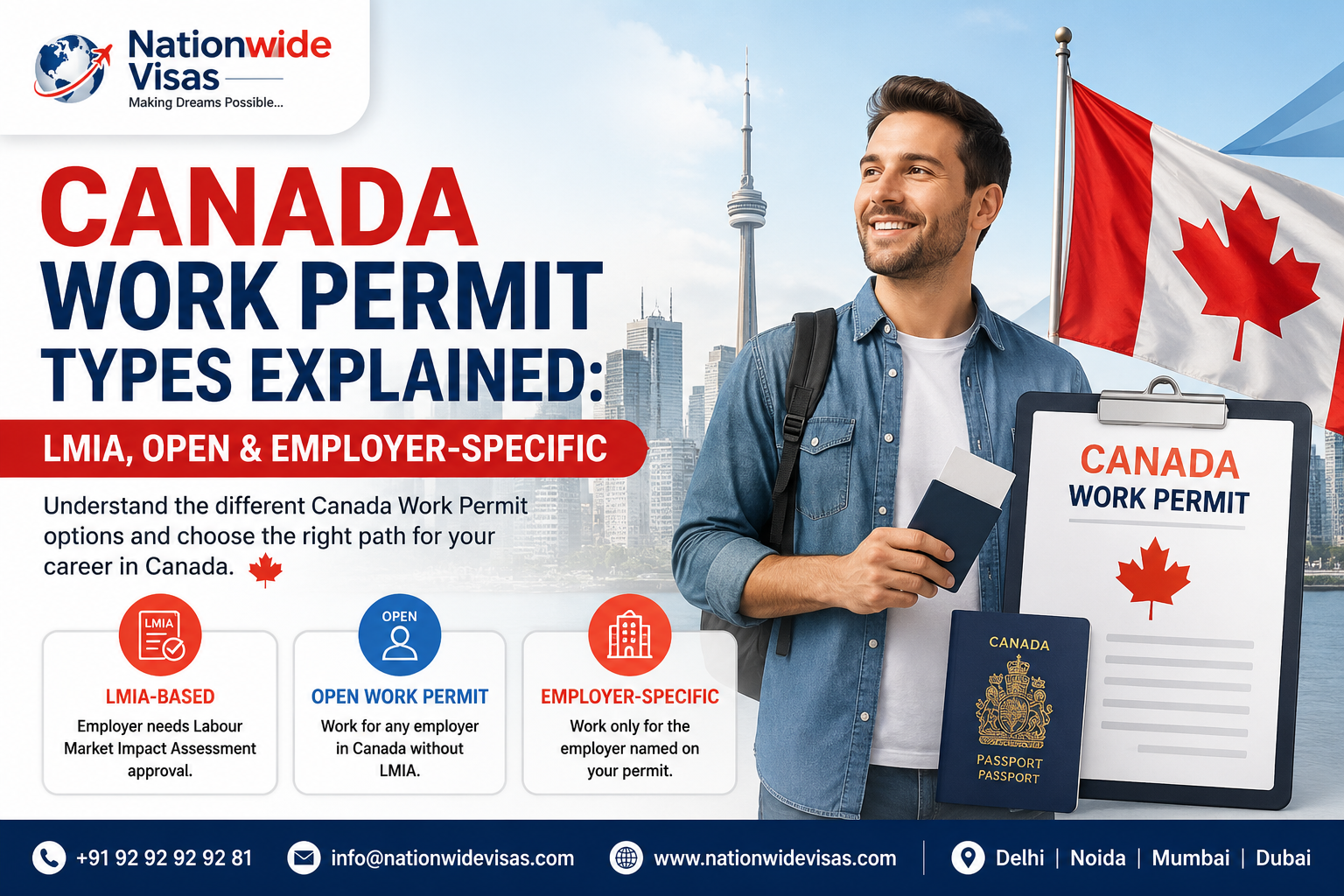
Mainly, there are two types of Canada work permits: open work permit and employer- specific work permits. An LMIA- based work permit generally falls under the employer specific category. Knowing and understanding the difference between these permits can help candidates select the best pathways and prepare the accurate documents.
In this guide, we will learn about types of Canada work permit,LMIA-Based Work Permit,Documents Are Needed for an LMIA-Based Work Permit, about Employer-Specific Work Permit,Open Work Permit, and many more
What Are the Main Types of Canada Work Permits?
Canada work permits can be divided into 3 categories:
- Employer-specific work permits: Under this category employees get to work under the conditions which are listed on the permit, including occupation, location and employer.
- Open work permits: It will give applicants permission to work for most compliant employers in Canada without being connected to a particular employer.
- LMIA-based work permits: It is a common form of employer specific work permit, where the employer needs a positive Labour Market Impact Assessment (LMIA).
The type of permit you can apply for depends on your eligibility. You cannot simply choose any work permit category.
What is an LMIA-Based Work Permit?
A Labour Market Impact Assessment(LMIA) helps in determining whether hiring an international worker will have a positive or negative impact on Canada’s labour market. A positive LMIA generally gives clarity that there is a need for skilled professionals and that no Canadian worker or permanent resident is there to fill the vacant position.
For an LMIA required position, the Canadian employer is generally required to obtain a positive LMIA before the skilled worker applies for the work permit.
What Documents Are Needed for an LMIA-Based Work Permit?
Applicants may require documents like:
- Positive file number and LMIA
- Letter of employment offer
- Contract of employment
- Evidence of pertinent job experience
- Professional or educational credentials
- Resume and additional supporting documentation
The exact documents depend on the application and job circumstances.
What is an Employer-Specific Work Permit?
An employer- specific work permit, sometimes called a closed work permit, generally allows a skilled worker to work according to the specified conditions. These conditions can include profession, employer and the location of employment.
Most employer-specific work permits require a job offer. Depending on the designation and immigration program, the employer might require an LMIA. However, some employer- specific permits are LMIA- exempt under specific programs.
For an LMIA- exempt position, the employer might need to give a job offer letter via the Employer Portal and give the work with an offer of employment number.
Can You Change Employers?
If you already have an employer- specific work permit and now wish to change your employers. Then you should be eligible to apply for a new work permit. In some circumstances, workers might request authorization to start working for the new employer during the processing period of your application.
What is an Open Work Permit?
An open work permit is totally different from LMIA as under this employee is not tied to any particular employer.
In Canada, eligible open work permit holders can typically work for the majority of conforming companies without needing an LMIA from them.
However, not everyone is eligible for an open work permit. Candidates must fit into one of the IRCC’s designated situations or categories.
Who Can Get an Open Work Permit?
An open work permit is available for some people, as it entirely depends on the circumstances.
- International students and graduates.
- Partners and spouses who fulfill the eligibility criteria.
- Permanent residence qualifies the situation.
- Refugee claimants
- Participants in specific immigration programs
Eligibility rules can vary, so candidates should check the current IRCC requirements before applying.
LMIA vs Open Work Permit vs Employer-Specific Work Permit
| Feature | LMIA- Based | Employer- Specific | Open Work Permit |
| Job offer | Generally required | Required | Not required |
| Employer restriction | Yes | Yes | Generally, no |
| LMIA | Generally required | May be required | Not required |
| Job flexibility | Limited | Limited | Higher |
| Eligibility | Program-specific | Program-specific | Specific eligible situations |
The key point is that LMIA-based permits are generally employer-specific, while open work permits provide greater flexibility for eligible applicants.
How to Apply for a Canada Work Permit?
The application process entirely depends on the type of permit and location( where you apply). Generally candidates should:
- Verify their eligibility and choose the right category for their work visa.
- If necessary, obtain a qualified job offer.
- Ask the potential employer to confirm the LMIA requirement.
- Prepare the necessary paperwork, such as identity and job documents.
- Apply for a work permit using the proper procedure.
- If necessary, submit biometrics and wait for a ruling.
Most foreign nationals need a work permit to work in Canada, although certain exemptions exist.
Can a Canada Work Permit Lead to Permanent Residence?
A Canadian work permit does not guarantee permanent residency. However, depending on their occupation, work experience in Canada, language proficiency, and other considerations, eligible workers may eventually be eligible for immigration programs.
For instance, eligibility for some economic immigration channels, such as Canada Express Entry programs, may be supported by Canadian job experience. Instead of presuming that a temporary work permit ensures permanent residence, candidates should evaluate their eligibility for permanent residence independently.
Using a Canada CRS score calculator can help applicants in getting an idea of their estimated CRS score and comprehend where they presently stand in the Express Entry pool. This can help them in discovering areas where they may be able to improve their profile before getting PR.
Final Thoughts
Selecting the right Canadian work permit entirely depends on your employer, job offer, LMIA, requirements and personal eligibility criteria. While an open work permit can give more employment flexibility for those who meet certain eligibility standards, an employer-specific visa may be appropriate for candidates with a valid job offer.
Make sure your employment information and supporting documentation are correct before applying by carefully reviewing the most recent IRCC regulations. If you need professional guidance with your Canada immigration journey, consulting a Best Visa Consultant in India can help you understand your options, prepare the required documentation, and navigate the application process more effectively.